



New white paper: Open Architecture for Campus Credentials and Commerce
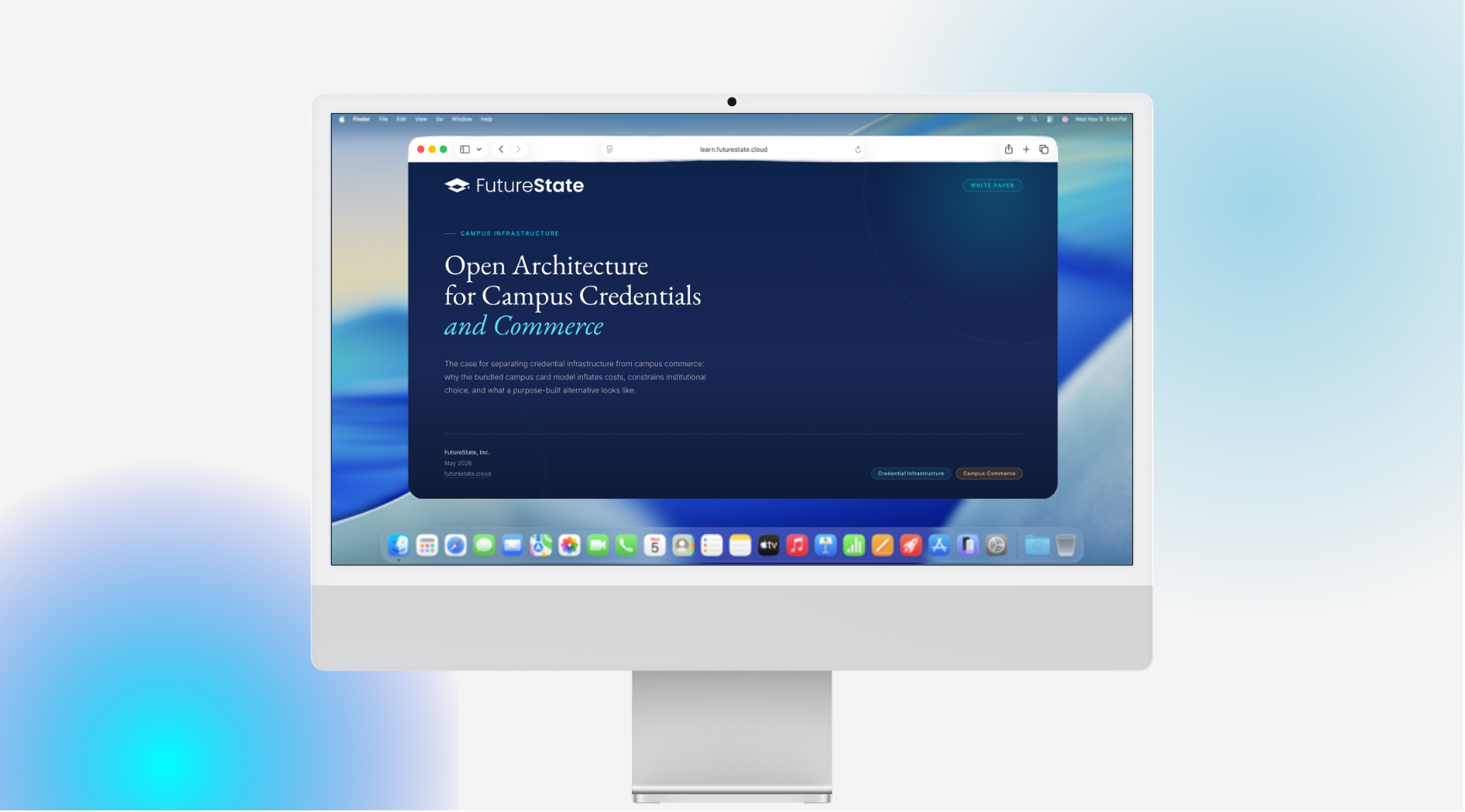
FutureState has published a new white paper making the case for separating credential infrastructure from campus commerce — why the bundled campus card model inflates costs, constrains institutional choice, and what a purpose-built alternative looks like.
What’s inside
The paper walks through the operational and financial implications of the legacy “all-in-one” campus card model and outlines an open-architecture approach in which credentialing, monitoring, and commerce are deliberately decoupled and connected through a vendor-agnostic integration layer.
- Why bundling credentials and commerce drives up cost and limits institutional flexibility.
- How a purpose-built credential layer changes the unit economics of campus identity programs.
- The role of an open integration model in giving institutions real choice across access, dining, housing, and payments.
- What a modern reference architecture looks like — with CardSync™, CardPulse™, and BalanceU™ as working examples.
Who it’s for
Campus card program managers, CIOs and CTOs, auxiliary services and dining leadership, procurement teams, and integration partners evaluating the long-term cost and flexibility of their current credential stack.
Read the white paper
The white paper is hosted on FutureState’s learning portal. Access is granted via a short request form.
-
Request an access code Submit the short request form to receive your code by email.Request access
-
Already have a code? Access the full white paper here. Enter your code at learn.futurestate.cloud to read the paper.Go to portal